Blog · Practical
Caregiver Support Guide in Quebec: Resources, Burnout, and When to Consider Placement
Complete guide for family caregivers in Quebec: available support resources, signs of burnout, legal rights, and how to know when to consider residential placement for your loved one.
Dignéa · March 14, 2026 · 8 min read
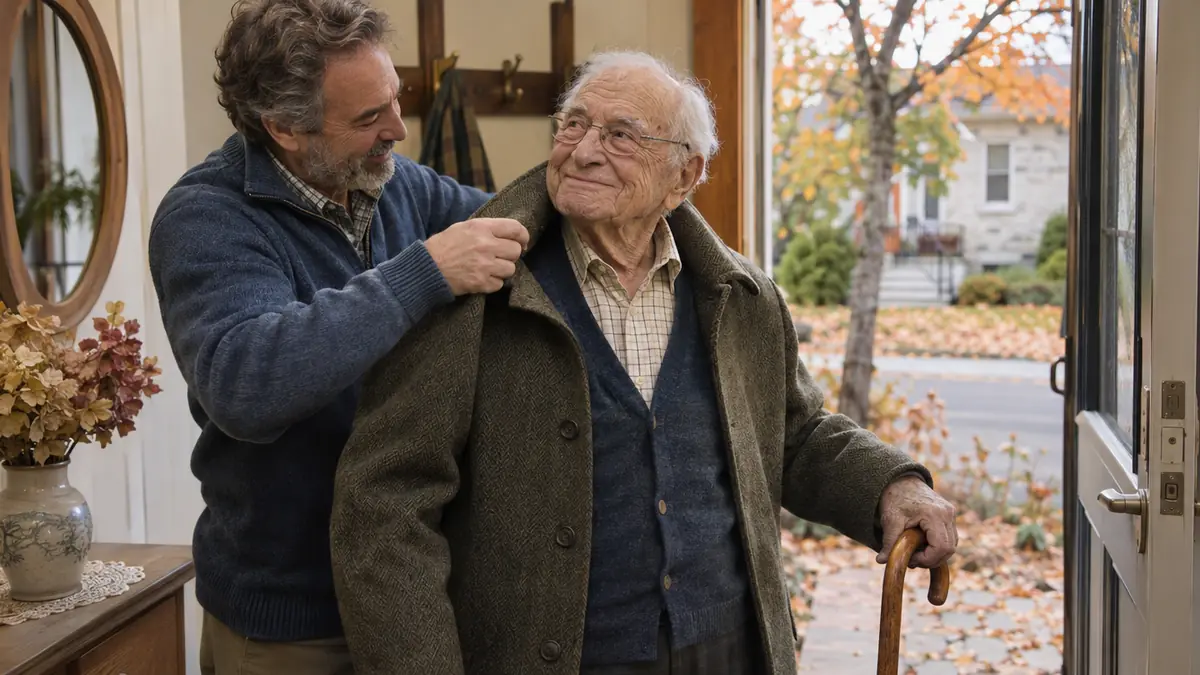
In Quebec, more than two million people, or about 27% of the population aged 15 and over, acted as caregivers in 2024-2025 for a parent, spouse, friend, or neighbor with a health problem, physical or cognitive disability, or age-related difficulties1. This role, often taken on with love and dedication, can nonetheless have significant consequences on the health and quality of life of the caregiver themselves.
This guide presents the resources available in Quebec, the signs to recognize, and the options when home-based care is no longer sufficient.
1. Who Is Considered a Family Caregiver?
Quebec law officially recognizes caregiver status under the Act to recognize and support caregivers (2020). Under section 2 of the Act, a caregiver provides, on a non-professional basis, continuous or occasional support to someone in their circle who has a temporary or permanent physical, psychological, psychosocial, or other disability, and with whom they share an emotional bond, whether a family bond or not.
This support can take many forms:
- Help with personal care (bathing, dressing, meals)
- Accompanying to medical appointments
- Emotional support and supervision
- Managing finances and administrative obligations
- Coordinating professional services
You do not need to live with the person you care for to be recognized as a caregiver.
2. The Scale of Impact on Caregivers' Health
The numbers show it: in Quebec, 69% of caregivers have experienced stress related to their role, and 17% report having physical health problems1.
Common Physical Impacts
- Chronic sleep deprivation
- Musculoskeletal pain (back, shoulders)
- Neglect of one's own healthcare
Common Emotional Impacts
- Constant anxiety and worry
- Feelings of guilt (for not doing enough, or for wanting a break)
- Sadness, anticipatory grief
- Progressive social isolation
- Loss of personal identity (the caregiver becomes only a caregiver)
Caregiver Burnout
Caregiver burnout is a state of deep physical, emotional, and mental exhaustion that occurs when the caregiver's resources are overwhelmed by the demands of the role. It does not happen overnight: it develops gradually, often in an insidious way.
Warning signs to watch for:
- You feel exhausted even after a full night's sleep
- You no longer find pleasure in activities you once enjoyed
- You feel irritable or angry toward the person you are caring for
- You neglect your own health (postponing medical appointments, poor diet)
- You feel alone and misunderstood
- You have intrusive thoughts related to the future or the death of your loved one
If you recognize several of these signs, it is time to seek support.
3. Resources Available in Quebec
Quebec has a network of resources for caregivers. Unfortunately, these resources are often underutilized because people do not know they exist.
Caregiver Organizations
Every region of Quebec has one or more community organizations dedicated to caregivers. They offer:
- Support groups: meet other caregivers living through similar situations
- Individual support: meetings with a counselor to discuss your situation
- Training: how to provide certain care safely
- Information and referral: knowing the resources in your region
To find the caregiver organization in your region: the resource directory of L'Appui, or its Caregiver Support Helpline (Info-aidant), at 1 855 852-7784 or by chat, Monday to Friday from 8 a.m. to 6 p.m.
The Respite Program
Respite allows the caregiver to take a temporary break from their role. It comes in several forms:
| Type of Respite | Description |
|---|---|
| In-home respite | A professional or volunteer takes over at your loved one's home |
| Day center | Your loved one attends a day center (stimulation, socialization) while you rest |
| Residential respite | Your loved one is temporarily hosted in a residence or CHSLD |
| Night respite | Overnight supervision at home to allow the caregiver to sleep |
Some respite programs are funded by the CIUSSS or community organizations. Ask your CLSC for information2.
Public Home Care (SAD)
CIUSSSes offer home support services (SAD) to people losing autonomy, which indirectly reduces the caregiver burden. These services include:
- Help with hygiene and personal care
- Home nursing care
- Help with domestic activities, such as meals (Meals on Wheels, for its part, is offered by community organizations, for a fee)2
- Light housekeeping
- Personal support workers
Access requires a needs assessment by a CLSC professional. Despite waiting lists, these services can provide significant relief.
Caregiver Leave From Work
The Act respecting labour standards provides for caregivers:
- 10 days per year to take care of a family member or a person you support as a caregiver, because of their state of health; the first 2 days are paid once you have three months of uninterrupted service (s. 79.7)
- Up to 16 weeks in 12 months when your presence is required because of a serious illness or serious accident (s. 79.8)
- Up to 27 weeks in 12 months in the case of a serious, potentially mortal illness, attested by a medical certificate (s. 79.8.1)
These longer leaves are not paid by the employer.
Some employers offer even more generous programs. Check your collective agreement or your employer's HR policies.
Caregiver Tax Credits
At both the federal and provincial levels, several tax credits exist:
- Canada caregiver credit (federal): a non-refundable credit, if your loved one has a physical or mental impairment and regularly relies on you for basic needs (food, shelter, clothing)3
- Tax credit for caregivers (Quebec): note that it is refused if the person you help lives in a private seniors' residence4
- Tax credit for home support: your loved one aged 70 or over (or their spouse) claims it, not you, for the services they pay for
Consult a tax specialist or the Revenu Québec website to determine what you are entitled to.
4. Taking Care of Yourself: It Is Not Selfish
One of the greatest difficulties for caregivers is allowing themselves to take care of their own needs without guilt. Yet the reality is simple: an exhausted caregiver can no longer provide quality support. Like the safety announcement on airplanes: put on your oxygen mask before helping others.
Some concrete practices to preserve your well-being:
- Accept help when it is offered, even if imperfect
- Maintain at least one activity that belongs to you (sports, reading, contact with friends)
- Talk about your experience with a professional (psychologist, social worker) or a support group
- Set clear limits on what you can and cannot do
- Plan regular respite periods, even short ones
5. When to Consider Residential Placement
One of the most difficult questions for a caregiver is knowing when it is time to consider residential placement for their loved one. This decision is often experienced as a failure or a betrayal, when in reality it is often the sign of a clear-eyed and responsible kind of love.
Here are concrete indicators that suggest the current situation has reached its limits:
Safety-Related Indicators for Your Loved One
- Your loved one has had repeated falls at home
- There are elopement risks (wandering, doors left open)
- Medication management has become too complex or risky
- Your loved one is not eating enough or shows signs of dehydration
- There are severe hygiene problems despite your efforts
Caregiver Health-Related Indicators
- You are experiencing signs of severe burnout (see section 2)
- You have had to reduce your working hours or put your professional life on hold
- Your own health is deteriorating from lack of care
- Your family life (spouse, children) is seriously disrupted
- You are chronically not sleeping enough
Medical Need Indicators
- Your loved one needs regular nursing care that you cannot provide
- They require 24/7 supervision that you can no longer ensure alone
- Their condition is deteriorating faster than you can adapt
There is no universal "right time." Every situation is unique. What matters is acting before a crisis, when you still have time to evaluate options calmly, visit residences, and involve your loved one in the decision.
6. Talking to Your Loved One About Placement
Bringing up the subject of residential placement with an aging parent is often dreaded. Here are some tips:
- Choose the right moment: a calm time, without urgency, when both parties are rested
- Use "we" rather than "you": "How can we make sure you are safe?"
- Focus the conversation on safety and well-being, not your own limits
- Involve a professional (doctor, social worker) if the conversation goes in circles
- Propose visits to residences as an exploratory step, without commitment
Conclusion
Being a family caregiver is a profound act of love and solidarity. But that love should not cost you your own health. Quebec offers a range of resources to support you - use them without shame. And when residential placement becomes the best option for your loved one, take the time to visit a few residences and to choose, together with them, the one that will suit them.
Sources
Sources verified on November 15, 2026. Prepared with the help of artificial intelligence.
Notes
-
Institut de la statistique du Québec, Over two million people are informal caregivers in Québec, news release, November 3, 2026 (2024-2025 data). ↩ ↩2
-
Gouvernement du Québec, Programs and Services for Seniors, 2025 Edition, Home Help section, "Home care support services" and "Meals on Wheels", p. 13. ↩ ↩2
-
Canada Revenue Agency, Canada caregiver credit. ↩
-
Revenu Québec, Tax credit for caregivers: basic eligibility conditions. ↩